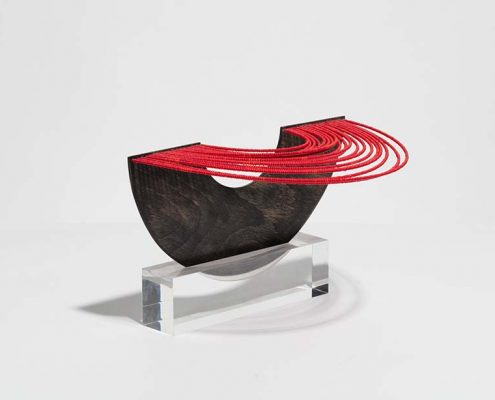
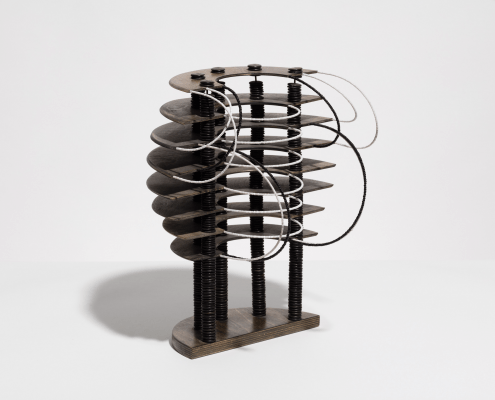
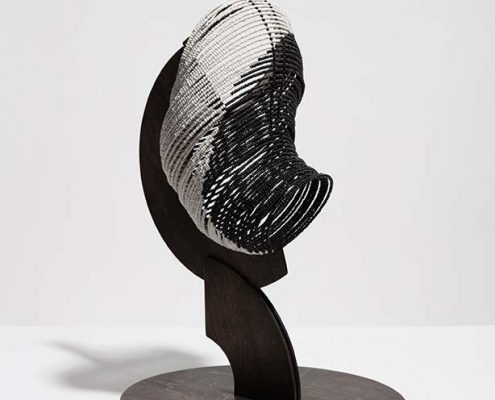
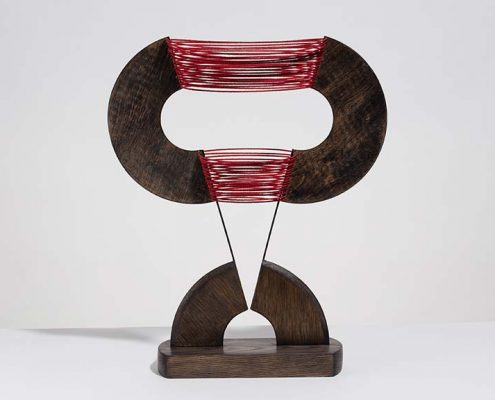
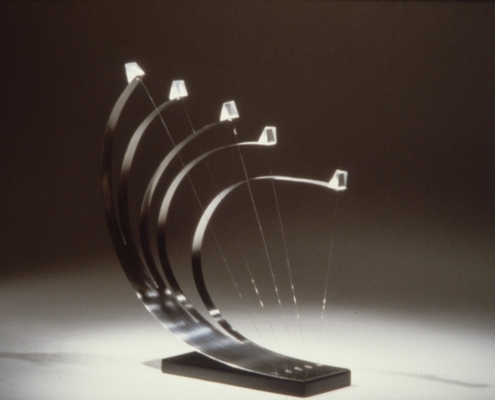
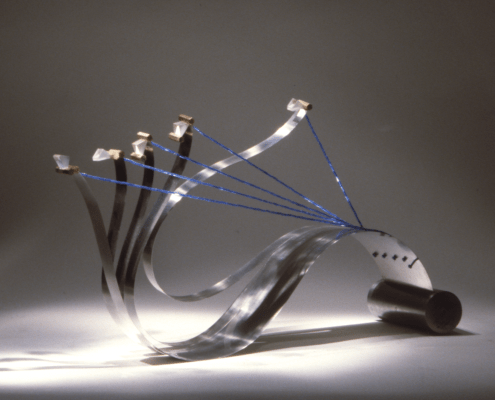
Lijn plays with geometry, collapsing and folding circular planes or segments of rings, using piano wire and beads as a flexible mobile extension of the plywood shapes with beads for colour. read more
In her bead heads series, Lijn plays with geometry, collapsing and folding circular planes or segments of rings, using piano wire and beads as a flexible mobile extension of the plywood shapes. read more
Study for a Head for a large performing sculpture. Woman of war came from a song Lijn wrote for her and then from the images of an armoured head. read more
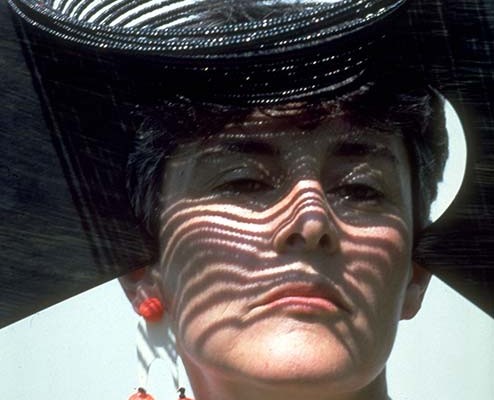
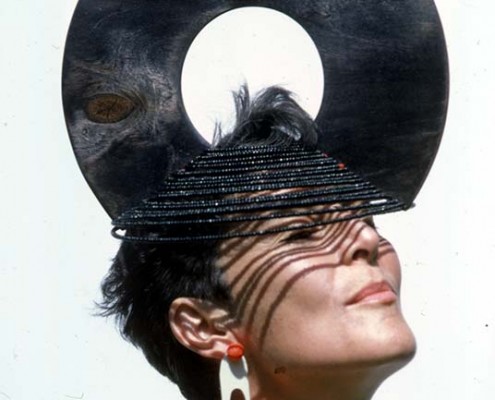
Lijn sees Head-Dresses as extensions of the Head. Anything worn on the head is also part of it and expresses it’s powers and restrictions. As in the veil or the mask worn by women to conceal and suppress them. read more
This head like the ears of the earth listens to the stars.
This head can be worn and become part of you.
This head is to the body as the mountain to the earth. read more
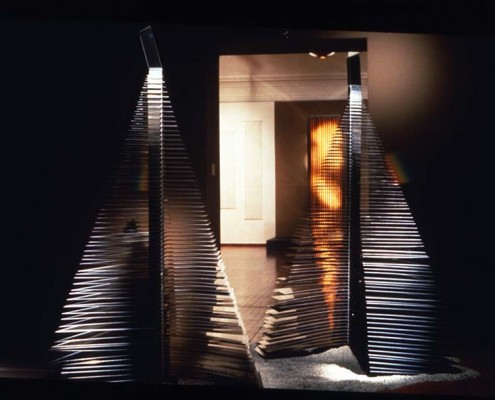
In Gemini Lijn returned to the fascinating liveliness of springs. The sculpture is both held in tension like a spring and uses springs humorously as a relief from tension. read more
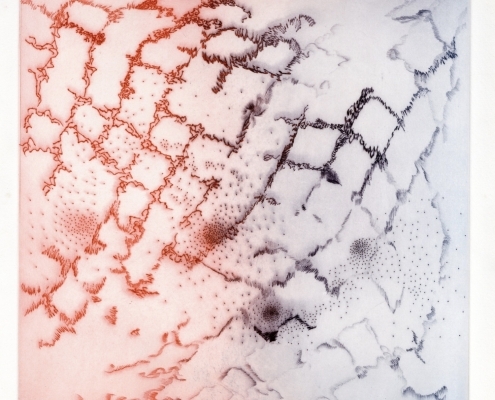
After the untimely death of the artist, ‘A Tribute to Birgit Skiold’ was produced to raise funds for the Birgit Skiold Memorial Trust. 118 artists from various countries contributed free of charge an edition of 25 prints in the 30 x 30 cm format, to create a portfolio of three volumes. read more
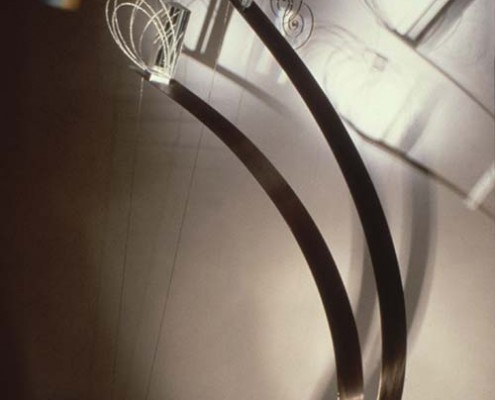
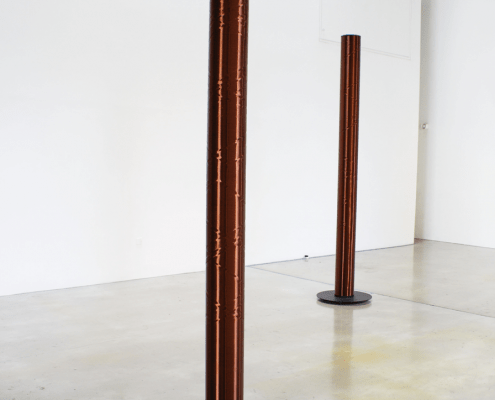
Lijn was interested in the way a reflected line of light describes the altered surface of the cylinder and gives precise information about any changes made to its surface. read more
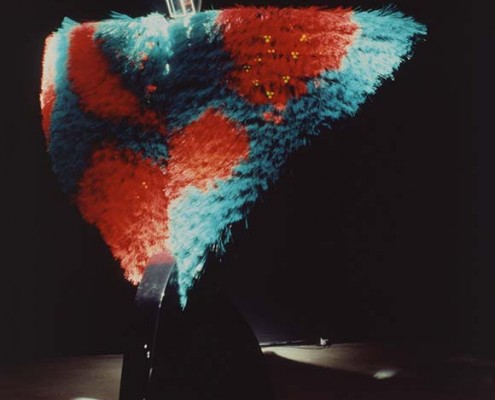
Lady of the Wild Things is a lunar archetype. Her light side, arrayed in red and green, a constant reminder of opposites, is showy and seductive and activated by sound. Her dark side, often unseen and acknowledged, is both threatening and all embracing. read more
Crossing Map is an illustrated prose poem by Liliane Lijn in which Lijn explores the idea that the human mind is disposed of a vast supply of untapped energy. What would it be like, Lijn posits, to inhabit a world in which humans became light? Crossing is the point where meeting occurs. Meeting leads to exchange and that is the basis of all relationships. read more
Instead of creating illustrations for the text, Lijn creates a visual score, as if the writing were lyrics that could be set to music, and the music could be seen instead of heard. read more