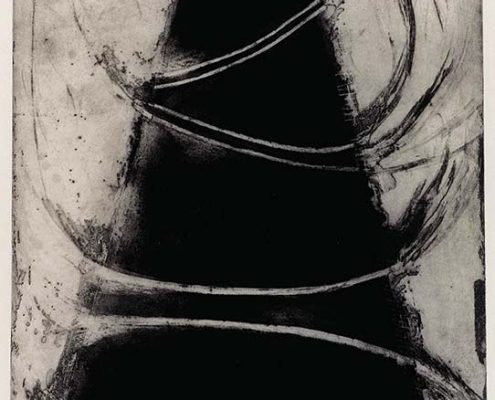
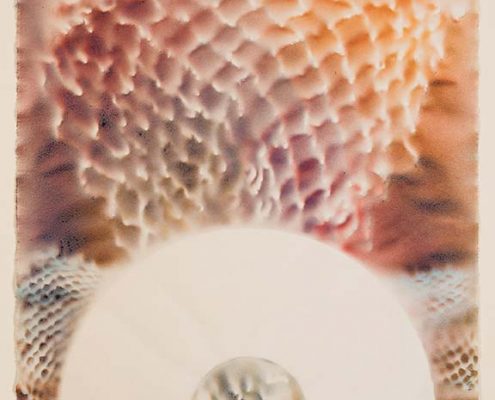
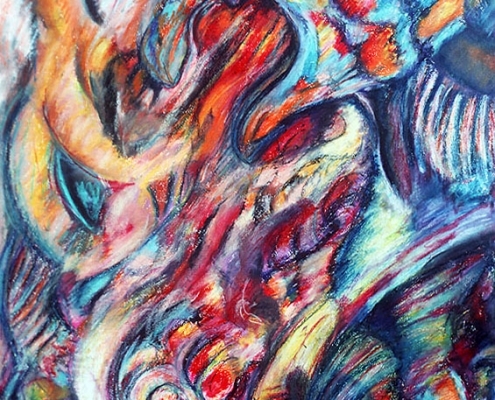
These works on paper were made as a way of conjuring up the Bride sculpture installations. In them, Lijn imagined the inner bride, the numinous and as yet featureless archetypal figure of the betrothed or possessed feminine. read more
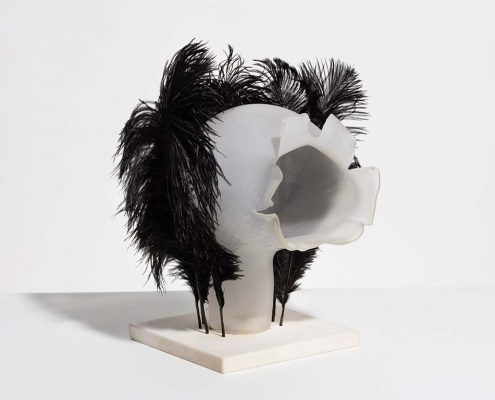
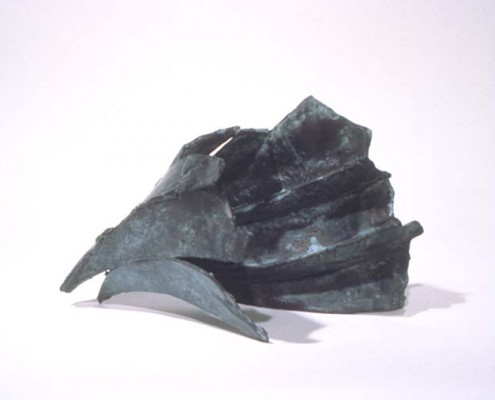
The Torn Heads series was an expression of pain and suffering, and the rupture of the head was a liberating act for Lijn. Instead of the solid geometric prism, a seeing transforming manmade tool, the head became a container of breath. read more
The Torn Heads series was an expression of pain and suffering, and the rupture of the head was a liberating act for Lijn. Instead of the solid geometric prism, a seeing transforming manmade tool, the head became a container of breath. read more
The Torn Heads series was an expression of pain and suffering, and the rupture of the head was a liberating act for Lijn. Instead of the solid geometric prism, a seeing transforming manmade tool, the head became a container of breath. read more
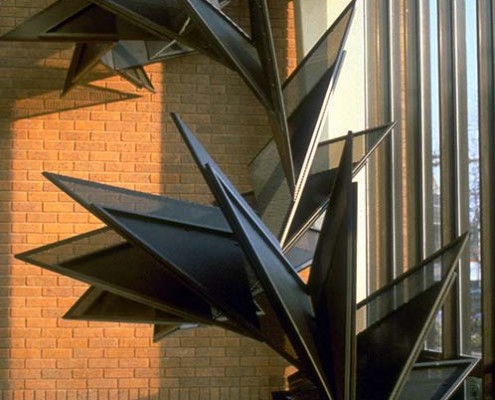
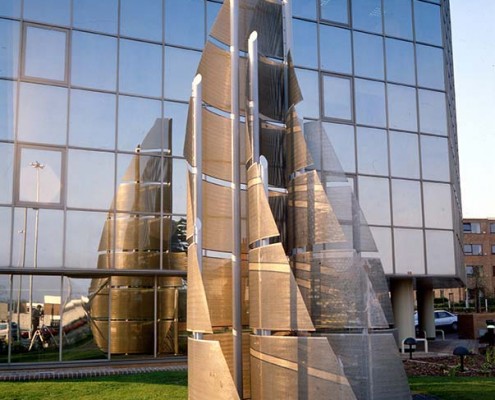
Liliane Lijn has been drawing soft conical forms for some time. Thinking of fan shaped open cones led to folded cones. This also came from making paper models for large-scale sculptures. Cones began to change into pyramids, obelisks and variations on these shapes. read more
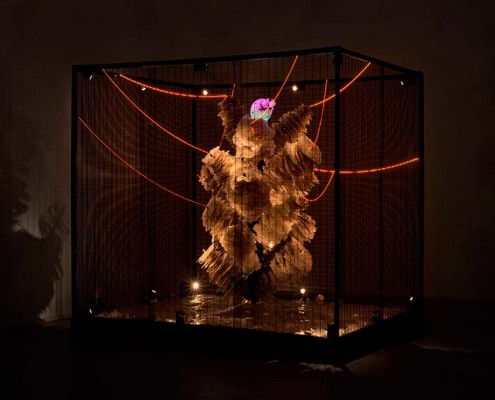
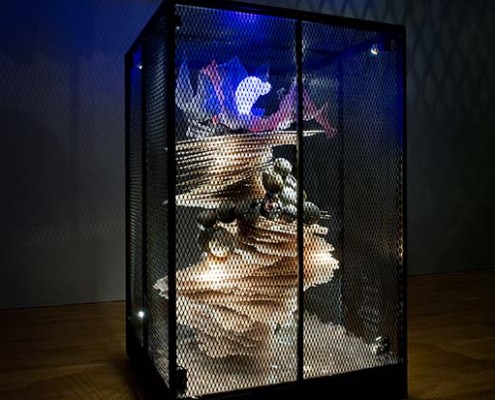
The figure of the Electric Bride stands in a steel enclosure, which separates her from our world. Electric Bride and the cage are connected by an electric current, which is made visible in the form of 9 red-hot wires. A glass head pulses with strobe light and a whispered text is heard. read more
Lijn used identical geometric elements to create an organic form dependent on the spatial relationship and connections between the separate elements. read more
In the 1980’s Lijn’s work was imbued with mythological and archetypal images. Lijn was uncovering different and new aspects of the feminine which were greatly nourished by her interest in a large spectrum of materials and technical processes. read more
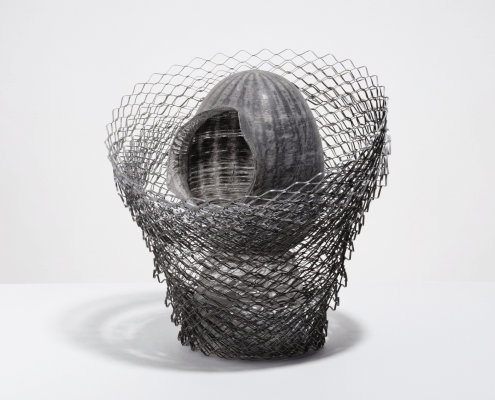
A series of works on paper all using the image of nets to configure the human head. Nets and meshes are a basic part of the iconography of Lijn's work. read more
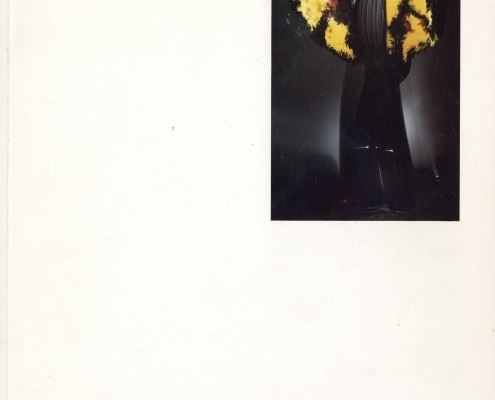
Catalogue published on the occasion of Lijn's solo exhibition Imagine the Goddess: Liliane Lijn, at Fischer Fine Art Gallery, London, March - April 1987. The catalogue includes an essay by Jasia Reichardt and an opening artist statement by Lijn. read more