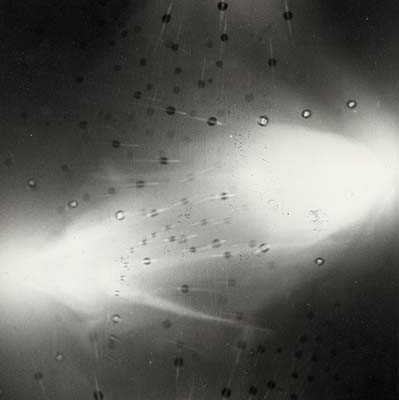
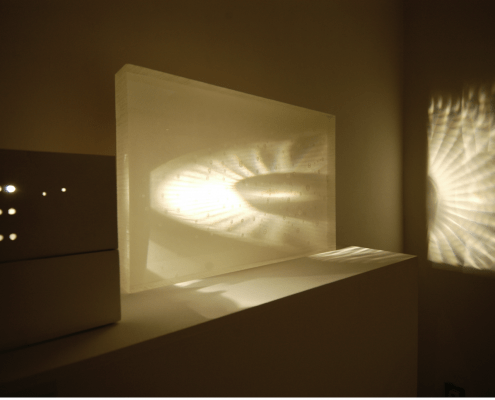
Lijn was interested in the shadows cast by the empty holes which transformed the negative spaces of the drilled holes into positive forms, creating the illusion of solids. read more
Lijn was interested in the shadows cast by the empty holes which transformed the negative spaces of the drilled holes into positive forms, creating the illusion of solids. Lijn felt she had created an architecture of the void. read more
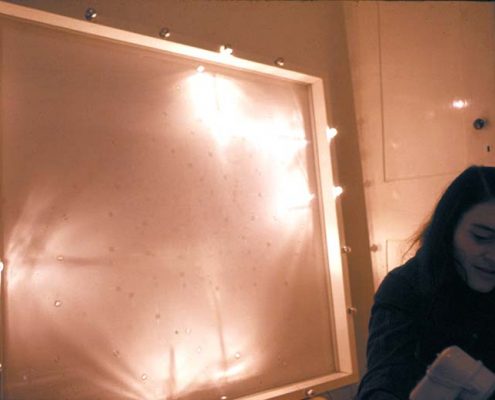
Cuttings are negative reliefs. The slices of saw-blade cuts made in a clear Perspex sheet are perceived as solid relief casting shadows on the back surface of the sheet, whereas the solid uncut area of the sheet is perceived as empty. The original concern of these early works was the interchangeability of opposites, i.e. that negative and positive were so close as to be indistinguishable. read more
Lijn was interested in the shadows cast by the empty holes which transformed the negative spaces of the drilled holes into positive forms, creating the illusion of solids. Lijn felt she had created an architecture of the void. read more
Cuttings were a development of Lijn’s first experiments with clear acrylic, ‘Fire Lines’, and represent her first attempt to generate an energetic vibration through the use of repetitive elements. read more
Cuttings were a development of Lijn’s first experiments with clear acrylic; 'Fire Lines', and represent her first attempt to generate an energetic vibration through the use of repetitive elements. read more
In 1960, Lijn began to experiment with plastic using fire. She drew in the air with vibrating, molten sticks of colored plastic called Tefelstuck, creating fine webs of colored lines that settled and bonded with the surface of acrylic sheets (with the help of a small torch). read more
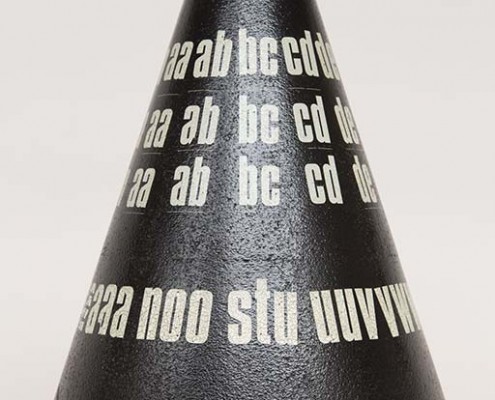
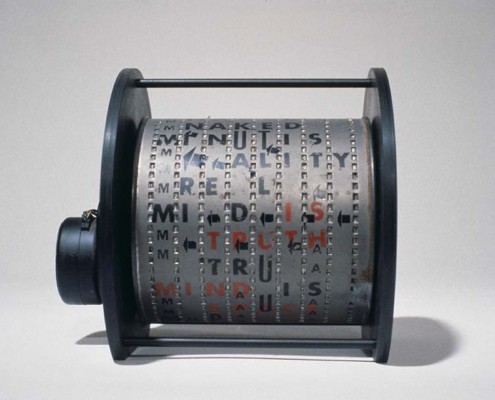
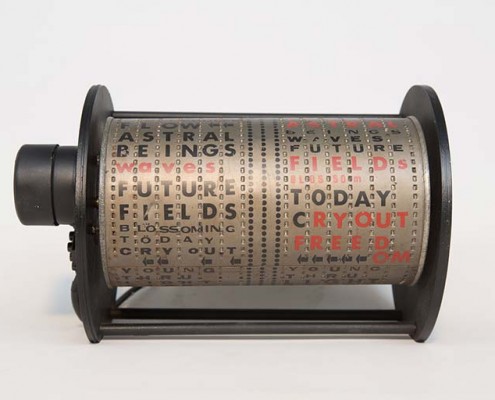
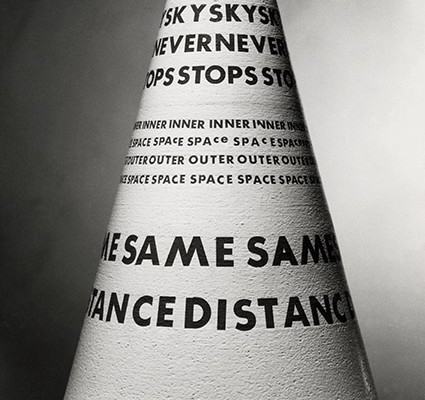
Sky Scrolls are the first works Lijn made in a series. They were influenced by her interest in Chinese horizontal scrolls and her love and fascination with the sky. read more